
.png)
Choosing the right ERP system is one of the most important decisions a growing business makes. Most organizations comparing Acumatica vs NetSuite have outgrown QuickBooks, spreadsheets, or a mix of disconnected tools, and now need a platform that will scale without locking them into unpredictable costs or limited flexibility.
Both Acumatica and NetSuite are well-known cloud ERP solutions, but they reflect very different philosophies around pricing, customization, deployment, and long-term control of your data.
Where Acumatica and NetSuite Are Similar
Both platforms deliver broad cloud-based ERP functionality, including financial management, distribution, CRM, eCommerce, and reporting tools. They support a wide range of verticals, including manufacturing, distribution, retail, construction, and services, and can serve as a complete operational hub.
But once you look past the feature checklist, the differences become clear: pricing predictability, usability, customization tools, data access, and implementation experience all diverge significantly. Those differences usually determine long-term satisfaction.
Acumatica vs NetSuite: Your Top Questions Answered
Below is a concise FAQ to help you confidently compare NetSuite vs Acumatica across the factors that matter most to financial leaders, operations teams, and technology decision-makers.
- Is Acumatica cheaper than NetSuite?
Often, yes, especially as your organization grows.
NetSuite uses a per-user pricing model combined with transaction or resource-based charges. New customers often receive discounted first-term licenses, but those discounts commonly disappear at renewal. Many organizations experience significant cost increases, sometimes 50% or more, once the initial contract ends. Add-on modules for functions beyond core financials can also cause costs to escalate.
Acumatica uses a consumption-based model that allows unlimited users. Costs scale with the resources your business consumes, not with the size of your workforce. This makes Acumatica pricing vs NetSuite more predictable and controllable, particularly for companies that add users seasonally or are growing quickly.
If predictable long-term TCO is a priority, Acumatica generally offers better cost stability.
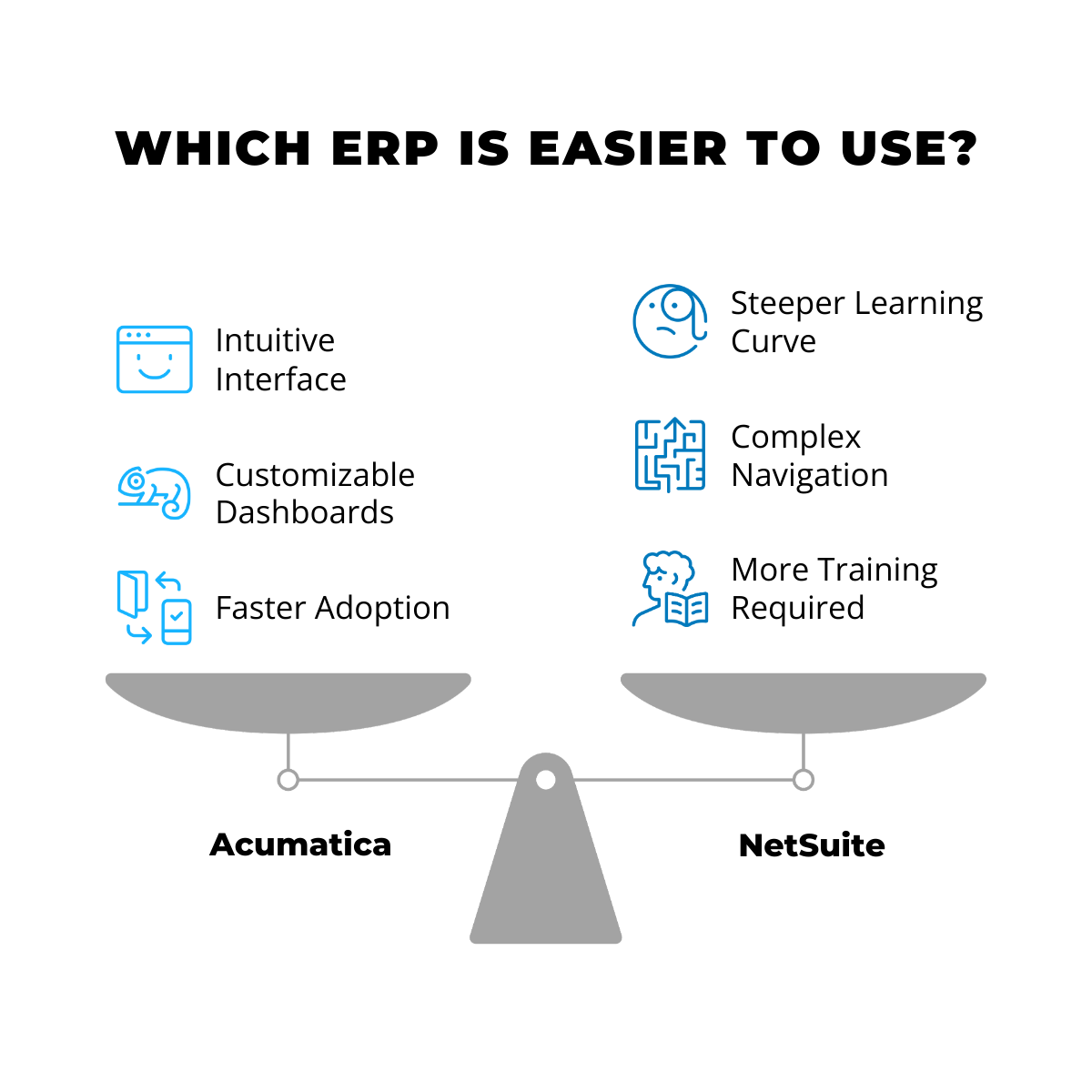
- Which ERP is easier to use?
Acumatica is consistently rated more intuitive and user-friendly.
Many NetSuite users report a steeper learning curve, a complex interface, and reporting tools that often require specialized expertise. Multiple navigation paths for the same process can make training inconsistent.
Acumatica emphasizes usability and has earned repeated recognition for its clean interface, role-based dashboards, and highly customizable workspace. Business users, without IT involvement, can build KPIs, pivot tables, and automated workflows. This reduces training time and accelerates adoption.
If widespread user adoption is important, Acumatica typically offers a smoother experience.
- How does Acumatica pricing vs NetSuite for seasonal or growing teams?
This is where Acumatica stands out most clearly. Because Acumatica does not charge per user, organizations can:
- Add temporary or seasonal staff
- Provide access to warehouse teams, field staff, or contractors
- Scale user counts up or down throughout the year
…without renegotiating license tiers or incurring surprise fees. NetSuite charges per user and may add costs for “excessive” transaction volume or additional usage. For rapidly growing or labor-intensive environments, this can significantly impact total cost of ownership.
- Which system gives you better control over your data?
The short answer? Acumatica.
Acumatica allows full relational database export at any time. You always maintain ownership and can back up or migrate data without restrictions.
NetSuite does not provide direct access to a full relational database export, which can create challenges during migrations or when deep integrations require complete data models.
For organizations with compliance, integration, or long-term data-access requirements, this distinction is critical.
- Which platform is more flexible to customize?
Acumatica uses industry-standard tools; NetSuite uses proprietary ones.
Acumatica customization is built on widely used technologies such as C# and .NET. This means:
- Your internal development team may already have the skills
- Partners can work more efficiently
- Customizations are generally easier to maintain
NetSuite customizations rely on proprietary tools like SuiteScript and SuiteFlow. They are capable but often require niche expertise, increasing long-term costs and limiting flexibility.
- Does NetSuite limit when you can upgrade?
Yes. NetSuite’s multi-tenant architecture requires customers to follow Oracle’s upgrade schedule unless they pay for special accommodations.
Acumatica lets customers upgrade on their own timeline, which is helpful for companies with complex processes, seasonality, or compliance constraints.
- Which ERP is less risky to implement?
Acumatica’s approach typically involves less risk for growing businesses.
NetSuite’s SuiteSuccess methodology focuses on standardizing early phases of implementation, but this often means:
- Limited initial scope (usually core financials + CRM)
- Little to no customization before go-live
- Penalties for delayed timelines
- A higher rate of “implementation rescue” projects
Acumatica’s FastTrack Deployment includes a discovery phase to validate scope, align processes, and avoid surprises. This upfront clarity usually leads to smoother go-lives and fewer post-deployment issues.
- Which ecosystem offers better partner support?
Acumatica is partner-first; NetSuite is mixed. NetSuite sells through partners and directly to customers. This sometimes leads to misaligned incentives or limited partner availability for SMBs.
Acumatica sells exclusively through certified partners and invests heavily in partner enablement. Gold Certified partners, like us at Cloud 9 ERP Solutions, are vetted for expertise, implementation quality, and ongoing customer support.
This structure gives customers clearer accountability and a more consistent support experience.
- Which ERP is better for long-term scalability?
Both systems support growth, but Acumatica typically offers more flexibility:
- Unlimited user licensing
- Multiple deployment options (cloud, hybrid, on-premises)
- Easier customization
- Full data ownership
- Predictable resource-based pricing
NetSuite can support scale as well, but the cost model and limited export options can become restrictive over time.
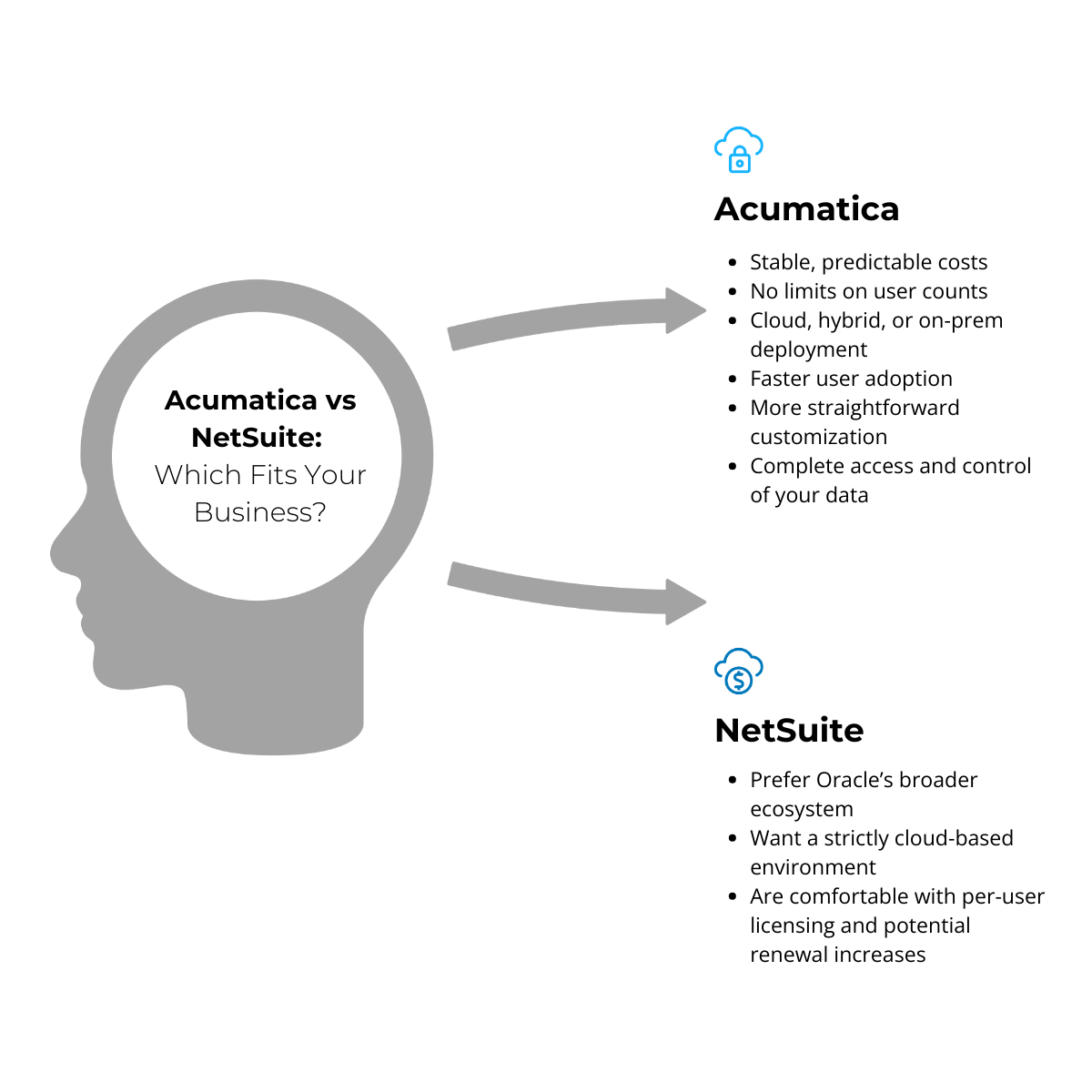
Recap: Which Should You Choose, Acumatica vs NetSuite?
Both systems are powerful, but the right choice depends on your priorities.
Choose Acumatica if you want:
- Predictable long-term costs
- Unlimited users
- Flexible deployment options
- Faster user adoption
- Easier customizations and integrations
- Full control over your data
- A partner-first support model
Choose NetSuite if you:
- Prefer Oracle’s ecosystem
- Want to stick with a rigid, SaaS-only environment
- Are comfortable with user-based pricing and potential renewal increases
Get Expert Guidance Before You Decide
Comparing Acumatica vs NetSuite is only the beginning. The best decision comes from understanding how each system aligns with your processes, team, and long-term strategy.
As a Gold Certified Acumatica Partner, Cloud 9 ERP Solutions helps businesses evaluate ERP options with clarity, not pressure. Schedule a complimentary consultation or demo today.